







Digital Flipbook Ecosystem (DFE) Based on Problem-Based Learning (PBL) to Improve Scientific Attitudes
Abstract
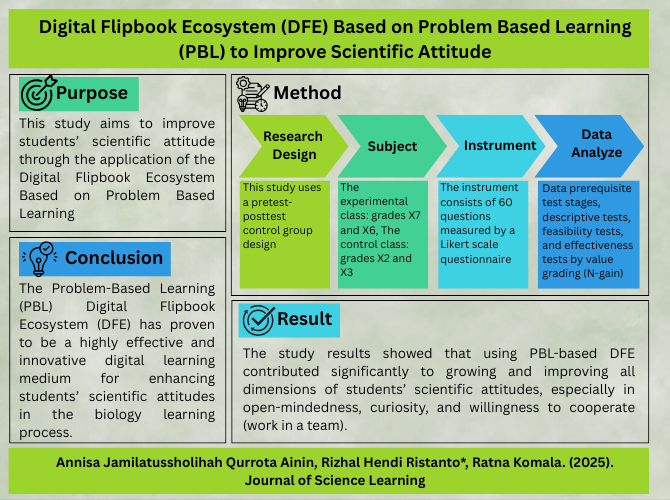
Digital Flipbook Ecosystem (DFE) on Problem-Based Learning (PBL) has been applied through the biology learning process to enhance students’ scientific attitudes towards ecosystem learning material. This learning model utilizes real problems in the surrounding environment as a trigger for scientific activities, so that students are trained to be able to be open-minded, work together, have a high level of curiosity, respect data, be sensitive towards the environment, be critical, and demonstrate perseverance. The study results showed that using PBL-based DFE contributed significantly to growing and improving all dimensions of students’ scientific attitudes, especially in open-mindedness, curiosity, and willingness to cooperate (work in a team). Problem-based learning visualized through DFE has been proven to increase motivation and active participation and strengthen students’ scientific behavior consistently in the biology learning process.
Keywords
Full Text:
Download PDFReferences
Adikara, G. J., Kurnia, N., Adhrianti, L., Astuty, S., Wijayanto, X. A., Desiana, F., & Astuti, S. I. (2021). Aman Bermedia Digital (G. J. Adikara & N. Kurnia, Eds.; 1st ed., Vol. 1). Direktorat Jenderal Aplikasi Informatika.
Agustina, D. W., & Fitrihidajati, H. (2020). Development Of Flipbook Based On Problem Based Learning (PBL) In Environmental Pollution Submaterial To Train The Critical Thinking Skills Of 10 Th Grades High School Students. BioEdu Berkala Ilmiah Pendidikan Biologi, 9(1), 325–339. https://doi.org/10.26740/bioedu.v9n2.p325-339
Aini, K., Megawati, & Rojayanti, N. (2021). Membekalkan Pengetahuan Prosedural dan Sikap Ilmiah Kepada Siswa SMA Melalui Pembelajaran Virutal Laboratory. Jurnal Program Studi Pendidikan Biologi, 11(1), 39–48.
Anastasha, D. A., & Movitaria, M. A. (2019). Constructivist Learning Approach To Improve Student Response And Outcomes Learning. Innovation in Islamic Education: Challenges and Readiness in Society, 5, 73–78.
Aprilia Putri, F., & Ari Pratiwi, I. (2025). The Effectiveness of the Problem Based Learning (PBL) Model Assisted by Flipbook Media on Improving the Learning Outcomes of Pancasila Education Grade 4 SDN 1 Datar. Taxonomy: Journal of Elementary Education Research, 5(1), 1–11. https://doi.org/10.35326/taksonomi.7057
Arika, F. Z., & Rachmadiarti, F. (2025). Pengembangan Flipbook Berbasis Problem Based Learning pada Materi Ekosistem untuk Melatihkan Literasi Sains Siswa. BioEdu: Berkala Ilmiah Pendidikan Biologi, 14(1), 123–127. https://ejournal.unesa.ac.id/index.php/bioe
Aytekin, Mehmet, Fahme, & Hatice. (2005). A New Model For The World Of Instructional Design: A New Model. The Turkish Online Journal of Educational Technology-TOJET, 4(3), 1–7.
Batubara, H. H. (2021). Media Pembelajaran Digital. PT. Remaja Rosdakarya.
Chand, S. P. (2023). Constructivism in Education: Exploring the Contributions of Piaget, Vygotsky, and Bruner. International Journal of Science and Research (IJSR), 12(7), 274–278. https://doi.org/10.21275/sr23630021800
Chengere, A. M., Bono, B. D., Zinabu, S. A., & Jilo, K. W. (2025). Enhancing Secondary School Students’ Science Process Skills Through Guided Inquiry-Based Laboratory Activities In Biology. PLoS ONE, 20(4 April), 1–18. https://doi.org/10.1371/journal.pone.0320692
Darling-Hammond, L., Flook, L., Cook-Harvey, C., Barron, B., & Osher, D. (2020). Implications for Educational Practice of the Science of Learning and Development. Applied Developmental Science, 24(2), 97–140. https://doi.org/10.1080/10888691.2018.1537791
Dwiyanti, P. B. (2025). E-Book Based Problem Based Learning to Improve Student’s Critical Thinking in Science Learning in Elementary School. Jurnal Ilmiah Pendidikan Guru Sekolah Dasar, 1(1), 41–57. https://journal.unj.ac.id/unj/index.php/pgsd/
Furbani, W., Purnawanti, F., Dewi, A. E. R., Sari, N., & Thoriq, T. (2025). Digital Literacy and Critical Thinking Skills of Students in the Era Industry 4.0. Juwara: Jurnal Wawasan Dan Aksara, 5(1), 136–148. https://doi.org/10.58740/juwara.v5i1.382
Golden, B. (2023). Enabling Critical Thinking Development in Higher Education Through the Use of a Structured Planning Tool. Irish Educational Studies, 42(4), 949–969. https://doi.org/10.1080/03323315.2023.2258497
Hendra, Afriyadi, H., Tanwir, Prakasa, Y. F., Hasibuan, R. P. A., & Asyhar, A. D. A. (2023). Media Pembelajaran Berbasis Digital (Vol. 1). PT. Sonpedia Publishing Indonesia.
Hmelo-Silver, C. E. (2024). Problem-Based Learning: What and How Do Students Learn? Educational Psychology Review, 16(3), 235–266.
Irmayanti, A., Damayanti, R., Wahyuni, A., Putra, A. P., Fajeriadi, H., Lisda, L. J., Zaini, M., Ayu, D., & Nia, A. (2024). Perbandingan penerapan metode Simulasi dan Problem-Based Instructional Untuk Meningkatkan Pemahaman Siswa Pada Materi Ekosistem. Study Program of Biology Education, 1(2), 61–65. https://doi.org/10.20527/bioco.v1i2.13822
Irvy, I. I. (2020). Understanding the Learning Models Design for Indonesian Teacher. International Journal of Asian Education, 1(2), 95–106. https://doi.org/10.46966/ijae.v1i2.40
Kamran, F., Kanwal, A., Afzal, A., & Rafiq, S. (2023). Impact of Interactive Teaching Methods on Students Learning Outcomes at University level. Journal of Positive School Psychology, 7(7), 89–105. https://www.researchgate.net/publication/372289203
Kruger, D. (2021). Adaptive Learning Technology to Enhance Self-Directed Learning. Research Unit Self-Directed Learning. https://doi.org/10.4102/aosis.2020.bk210.03
Landina, I. A. P. L., & Agustiana, I. G. A. T. (2022). Meningkatkan Berpikir Kritis Siswa melalui Media Pembelajaran Flipbook berbasis Kasus pada Muatan IPA. Mimbar Ilmu, 27(3), 443–452. https://doi.org/10.23887/mi.v27i3.52555
Lestari, D. A., Wakhyudin, H., Nursyahidah, F., & Istikomah, A. (2023). Efektifitas PBL terhadap Kemampuan Pemecahan Masalah Ekosistem. Journal on Education, 05(04), 13026–13034. https://doi.org/https://doi.org/10.31004/joe.v5i4.2301
Liu, F., Wang, X., & Izadpanah, S. (2023). The Comparison of the Efficiency of the Lecture Method and Flipped Classroom Instruction Method on EFL Students’ Academic Passion and Responsibility. SAGE Open, 13(2), 1–15. https://doi.org/10.1177/21582440231174355
Marleni, Rahayu, A., & Hermansah, B. (2024). The Influence of the Problem Based Learning Model on Students’ Learning Outcomes. ESTEEM: Journal of English Study Programme, 7(2), 334–347.
Muda, Mhd. A. M., Siburian, J., & Musli. (2024). Improving Students’ Critical Thinking Skills Using Multimedia in a Problem-Based Learning Model (PBL): a Narrative Review. Jurnal Ilmu Pendidikan (JIP) STKIP Kusuma Negara, 16, 245–265. https://doi.org/10.37640/jip.v16i2.2179
Munadhiroh, M., Elsafitri, R., Fibriana, N., & Ningsih, N. M. (2024). The Effect of Project Based Learning Assisted by Manipulative Learning Media on the Understanding of Elementary School Students. Advanced Journal of Education and Religion, 1(2), 91–101.
Mutiani, M., Syarifuddin, S., Syaharuddin, S., Hassan, M. I. bin A., Jumriani, J., & Nur’aini, F. (2024). The Effectiveness of Flipbook-Based Blanded Leaning Technology on Thinking Skills and Student Learning Outcomes. International Journal of Social Learning (IJSL), 5(1), 264–275. https://doi.org/10.47134/ijsl.v5i1.350
Novia, D., Husaeni, A., Rangga Gintara, A., Firdha Nabila, G., & Nursalman, M. (2025). Mengungkap Pentingnya Uji Normalitas dan Homogenitas dalam Penelitian: Studi Kasus dan Aplikasinya. Jurnal Pendidikan Tambusai, 9(1), 829–839.
Noviani, R., Nugraha, E., & Rustandi, A. (2023). Penerapan Model Problem Based Learning Berbantuan Flipbook Dalam Pembelajaran Membaca Pemahaman Teks Iklan Pada Peserta Didik Kelas VIII SMP Negeri 25 Kota Bandung. JISPENDIORA: Jurnal Ilmu Sosial, 2(2), 143–157. https://doi.org/10.56910/jispendiora.v2i2.665
Nuha, U., Wahyuni, S., Budiarso, A. S., Hasanah, U., & Anggraeni, N. E. (2021). The Effectiveness of Flipbook and Video to Improve Students’ Critical Thinking Skills in Science Learning during the COVID-19 Pandemic. Lensa : Jurnal Kependidikan, 9(1), 32–37. https://doi.org/10.33394/j
Nurhaedah, Hartoto, & Amalia, N. I. (2022). The Effect Of Problem Based Learning Model On Students Outcomes In Learning Natural Science Of 5 th Grade At UPT SDN 104 Tontonan Anggeraja District Enrekang Regency. (IJEST) International Journal Of Elementary School Teacher, 2(1), 39. https://doi.org/10.5937/IJESTxxx
Pardiñan, E. G., & Loremia, R. A. (2020). Digital Pedagogy Analysis On Technology Trend Relevant To Education 4.0. INTERNATIONAL JOURNAL OF SCIENTIFIC & TECHNOLOGY RESEARCH, 9(8), 390–399. www.ijstr.org
Purwoko, T. (2021). Problem-Based Learning (PBL) To Improve Students’ Crithical Thinking Skill. Social, Humanities, and Education Studies (SHEs): Conference Series, 4(6), 430–436. https://jurnal.uns.ac.id/shes
Putra, M. W. F., Mahardika, R. B. P., & Syahputra, M. (2022). Digitalisasi Pendidikan di Masa Pandemi COVID-19. Prosiding Seminar Nasional Ilmu Ilmu Sosial (SNIIS), 1(1), 715–723.
Ramandani, R., Lestari, N. A., Budiarto, E., Fitri, R., & Uulaa, R. (2023). Problem Based Learning Modules in Environmental Education to Improve Problem Solving Ability. International Journal of Research and Community Empowerment, 02(1), 1–13. https://doi.org/10.58706/ijorce
Ristanto, R. H., Rusdi, Mahardika, R. D., Darmawan, E., & Ismirawati, N. (2020). Digital Flipbook Imunopedia (DFI) A Development in Immune System e-Learning Media. International Journal of Interactive Mobile Technologies, 14(19), 140–162. https://doi.org/10.3991/ijim.v14i19.16795
Saragih, P. P., & Purwanti, P. D. (2025). Penerapan Media Flipbook Berbasis Problem Based Learning (PBL) Upaya Peningkatan Sikap Gotong Royong. BasicEdu, 9(1), 82–96. https://doi.org/10.31004/basicedu.v9i1.9107
Silalahi, D. E., Handayani, E. A., Munthe, B., Simanjuntak, M. M., & Wahyuni, S. (2022). LITERASI DIGITAL BERBASIS PENDIDIKAN: TEORI, PRAKTEK DAN PENERAPANNYA (Herman, Ed.; 1st ed., Vol. 1). PT. GLOBAL EKSEKUTIF TEKNOLOGI. www.globaleksekutifteknologi.co.id
Song, H., & Cai, L. (2024). Interactive learning environment as a source of critical thinking skills for college students. BMC Medical Education, 24(1). https://doi.org/10.1186/s12909-024-05247-y
Tobin, B., Farren, M., & Crotty, Y. (2024). Impacting Teaching and Learning Through Collaborative Reflective Practice. Educational Action Research. https://doi.org/10.1080/09650792.2024.2394933
Usmandi. (2020). Pengujian Persyaratan Analisis (Uji Homogenitas dan Uji Normalitas). Inovasi Pendidikan, 7, 50–62.
Wahyuni, S., Putri, A., Fadilah, R. E., & Sya’adah, H. (2025). Development of E-Modules Based on Puger’s Marine Potential to Improve Higher Order Thinking Skills in Junior High School. JIPI (Jurnal IPA Dan Pembelajaran IPA), 9(2), 312–325. https://doi.org/10.24815/jipi.v9i2.44379
Waruwu, Y., & Purba, F. J. (2022). Upaya Meningkatkan Sikap Ilmiah Siswa Pada Pembelajaran dengan Menggunakan Model Pembelajaran. ChemER, 02(02), 70–79.
Widiastuti, I. A. M. S., Mantra, I. B. N., Utami, I. L. P., Sukanadi, N. L., & Susrawan, I. N. A. (2023). Implementing Problem-based Learning to Develop Students’ Critical and Creative Thinking Skills. JPI (Jurnal Pendidikan Indonesia), 12(4), 658–667. https://doi.org/10.23887/jpiundiksha.v12i4.63588
Wilujeng, I., Ain, T. N., Rilianti, A. P., Hasyim, F., & Fiqiyah, M. (2025). The Effectiveness Of H5P-Asisted Differentiated-Independent Learning Model To Increase Low-Ability Students’ Scientific Literacy. Jurnal Pendidikan IPA Indonesia, 14(1), 32–41. https://doi.org/10.15294/jpii.v14i1.19560
Zhou, Y., Zhu, Y., & Wong, W. K. (2023). Statistical Tests for Homogeneity of Variance for Clinical Trials and Recommendations. Contemporary Clinical Trials Communications, 33, 1–11. https://doi.org/10.1016/j.conctc.2023.101119
DOI: https://doi.org/10.17509/jsl.v9i1.90576
Refbacks
- There are currently no refbacks.

Copyright (c) 2026 Rizhal Hendi Ristanto, Annisa Jamilatussholihah Qurrota Ainin, Ratna Komala

This work is licensed under a Creative Commons Attribution-ShareAlike 4.0 International License.


Jl. Dr. Setiabudhi 229 Bandung 40154, West Java, Indonesia